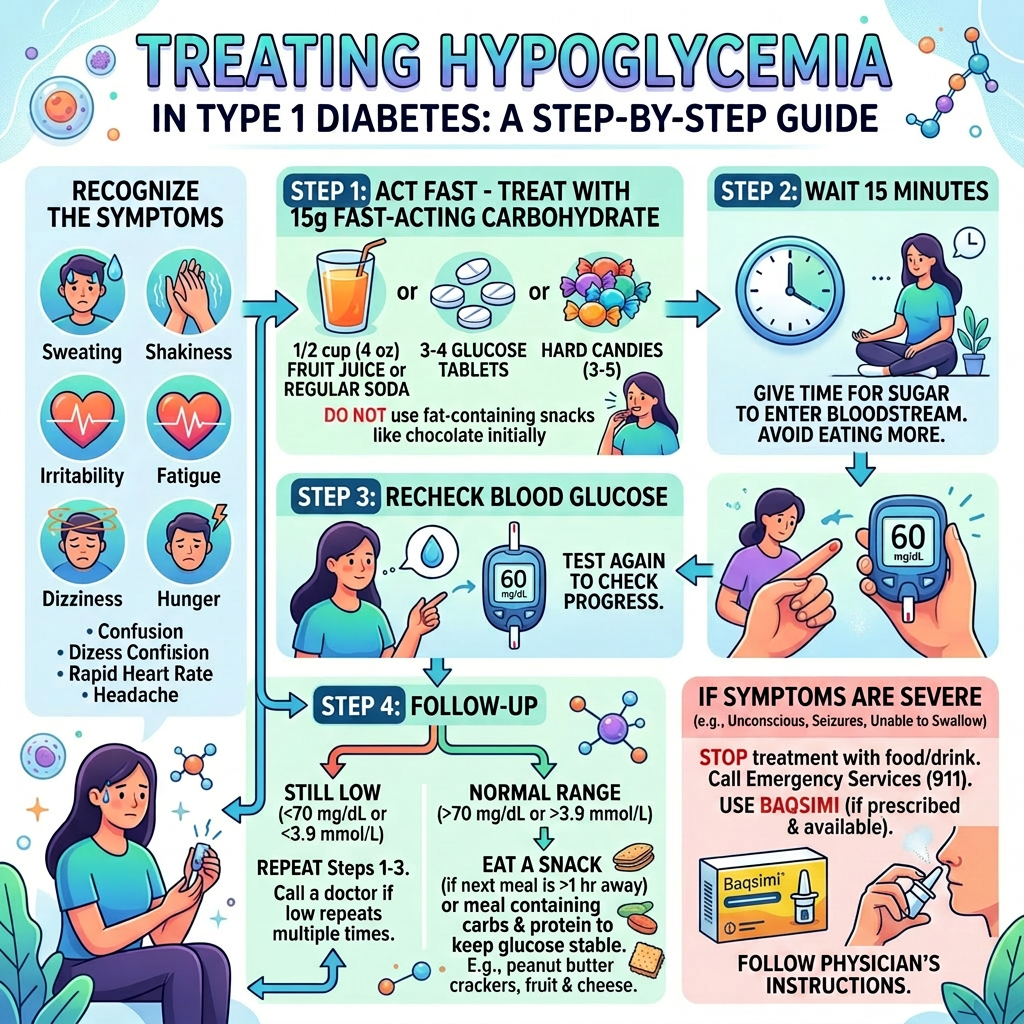

Low blood sugar officially known as hypoglycemia needs to be addressed quickly. When blood sugar is low (for My T1D guy ~80 mg/dL), immediate treatment is required:
- Consume 15–20 grams of fast‑acting carbohydrate, such as:
- Apple Sauce Pouch
- 4 oz juice
- Hard candy (not chocolate)
- Recheck blood sugar after ~15 minutes
- Repeat if still low
- If symptoms are severe (ie. unconcious) treat with Baqsimi and call 911.
- Follow with a longer‑acting carb/snack if needed (Protein source, Peanut Butter Crackers, etc)
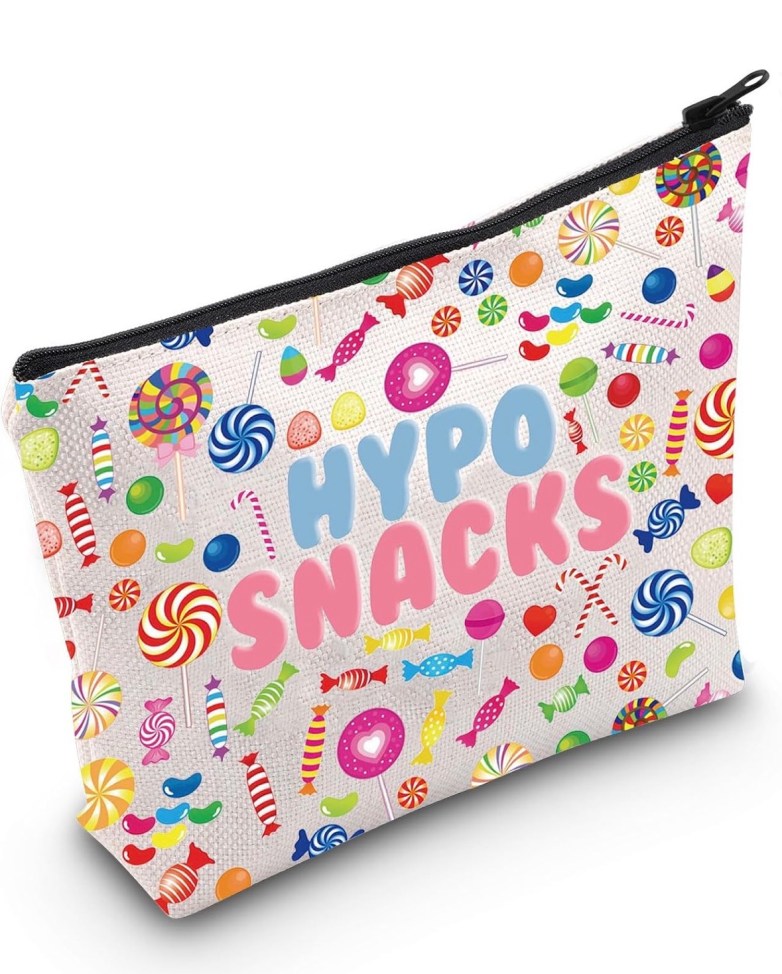
My T1D Guy carries this bag with him that has quick and easy snacks for him to use when treating a low blood sugar.
Want to know what’s in the bag? Right now it’s 4oz. Juicy Juice, GoGo Apple Sauce, PB Crackers, Slim Jims, and Welch’s Fruit Snacks!
A low blood sugar for Type 1 Diabetes is treated with fast‑acting carbohydrates—not protein—because carbs raise blood glucose quickly, while protein does not.
Here’s why.
What’s happening during low blood sugar
Low blood sugar (hypoglycemia) means there is too much insulin relative to available glucose in the bloodstream. The urgent goal is to raise blood glucose as fast as possible to protect the brain and prevent symptoms or loss of consciousness.
Why fast‑acting carbohydrates work
1. They turn directly into glucose! Fast‑acting carbs (like glucose tabs, juice, or regular soda) are rapidly digested, enter the bloodstream as glucose within minutes, and Cause a direct, predictable rise in blood sugar.
2. They work even when insulin levels are high. During a low, insulin is often still active (especially in Type 1 diabetes). Carbohydrates can overcome circulating insulin and raise blood sugar fast enough to reverse the low.
Why protein does not treat lows
1. Protein does not convert to glucose quickly. Protein Must be broken down into amino acids. This process is slow, inefficient, and inconsistent. It can take hours, not minutes—far too slow for hypoglycemia.
2. Protein can actually stimulate additional insulin release (in people who still make insulin) Potentially worsen or prolong a low in some situations. This is the opposite of what you want during hypoglycemia.
Why fat doesn’t work either
- Fat slows stomach emptying. Delays absorption of any carbs eaten with it
- Examples: chocolate, cookies, ice cream
These are poor choices for treating lows, even though they contain sugar.
Disclaimer: This T1D Mom isn’t a medical professional. This blog should not serve as medical advice. It is strictly a reflection of our personal experiences and general information to help educate our friends and those curious about what works for this T1D Guy.


