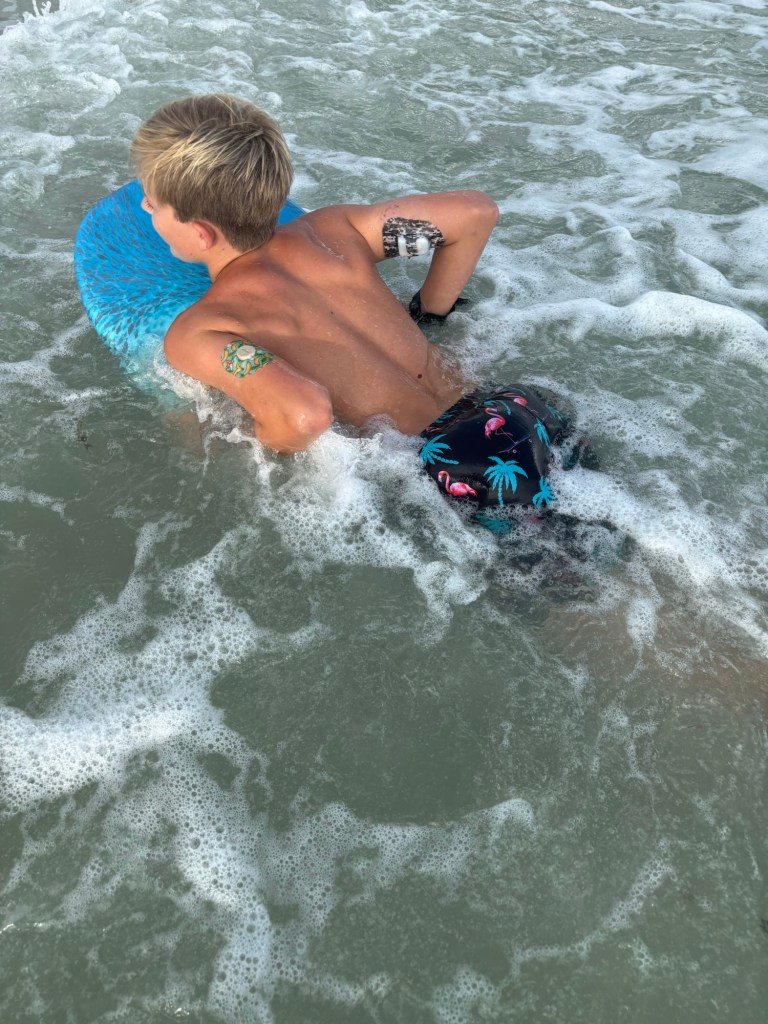
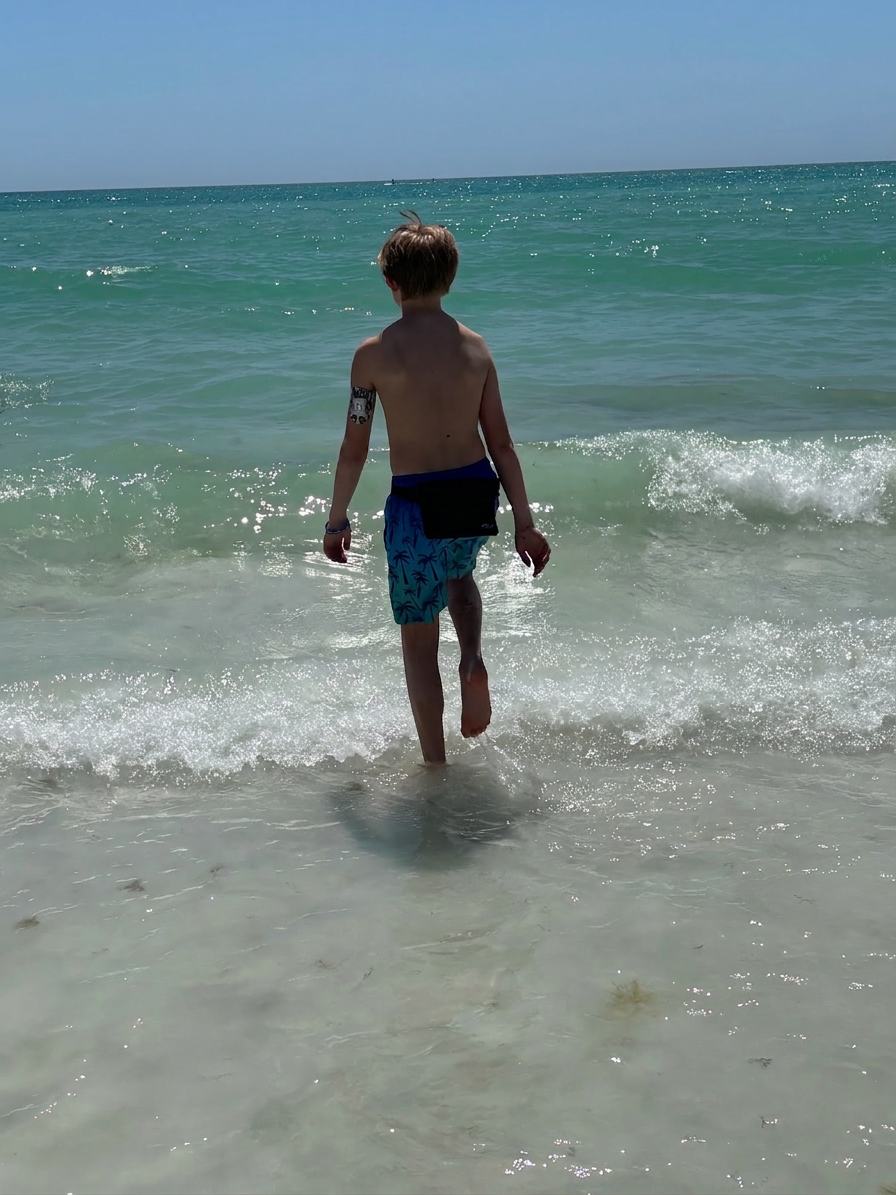
Our first summer with T1D felt no different than prior to his diagnosis. Whether it was a trip to our favorite beach, spending hours swimming in the pool, making memories at Kings Island, or spending time with friends T1D hasn’t stopped him from enjoying every minute of the fun. If anything, it’s taught us how resilient and adventurous he can be. We’ve learned to pack extra supplies alongside the sunscreen and snacks, and then get on with making the most of summer.
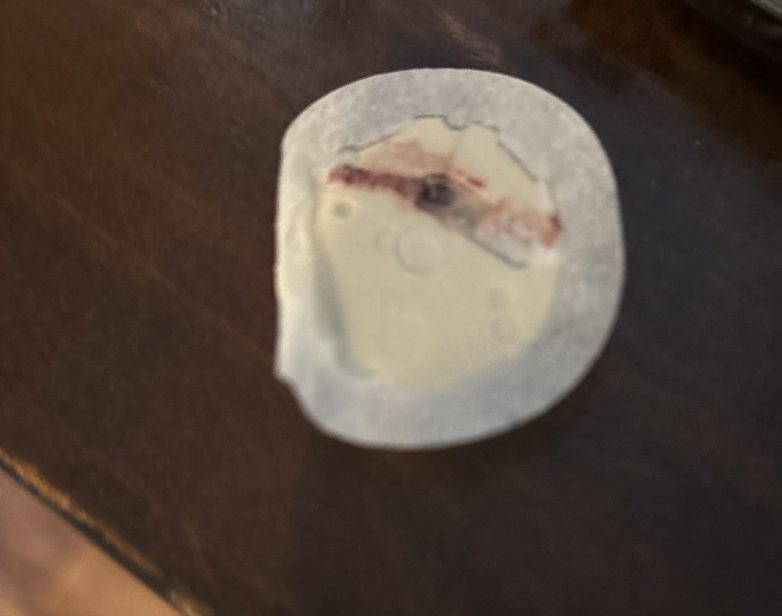
Even though we had some occasionally dramatic diabetes technology failures we have still learned to laugh along the way. Sometimes an extra-bumpy roller coaster seemed to be a little too much, and the sensor acted like it just rode the ride itself and decided it was time to retire early.
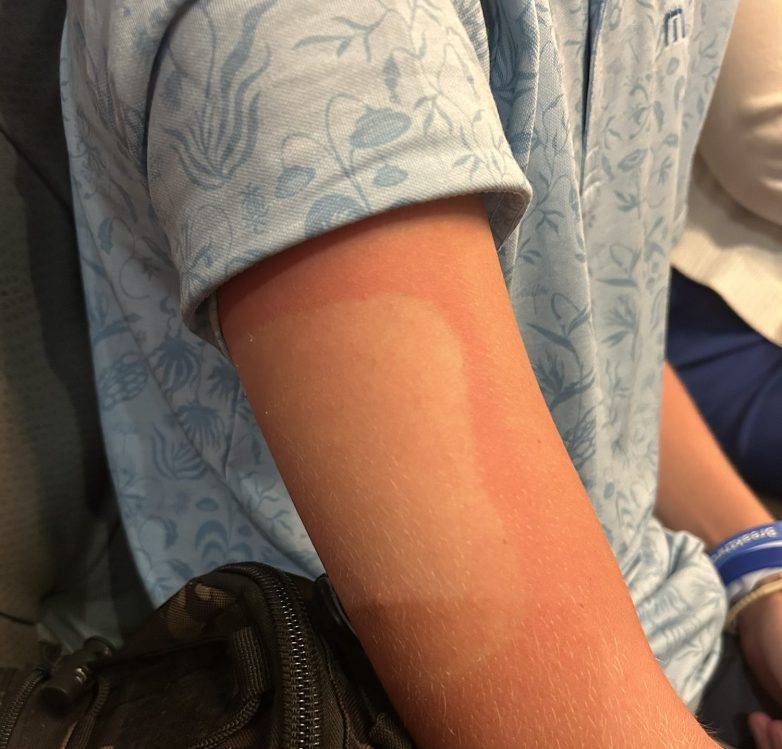
We did accidentally confirm that sunscreen does in fact crack the Omnipod and we had some wicked sticker-shaped tan lines. Sometimes the adhesive was no match for the number of hours spent in the water and bike riding causes crazy lows. I’m grateful that Type 1 Diabetes hasn’t stopped him from being exactly what a 12-year-old boy should be: active, fearless, and determined to squeeze every bit of fun out of summer.
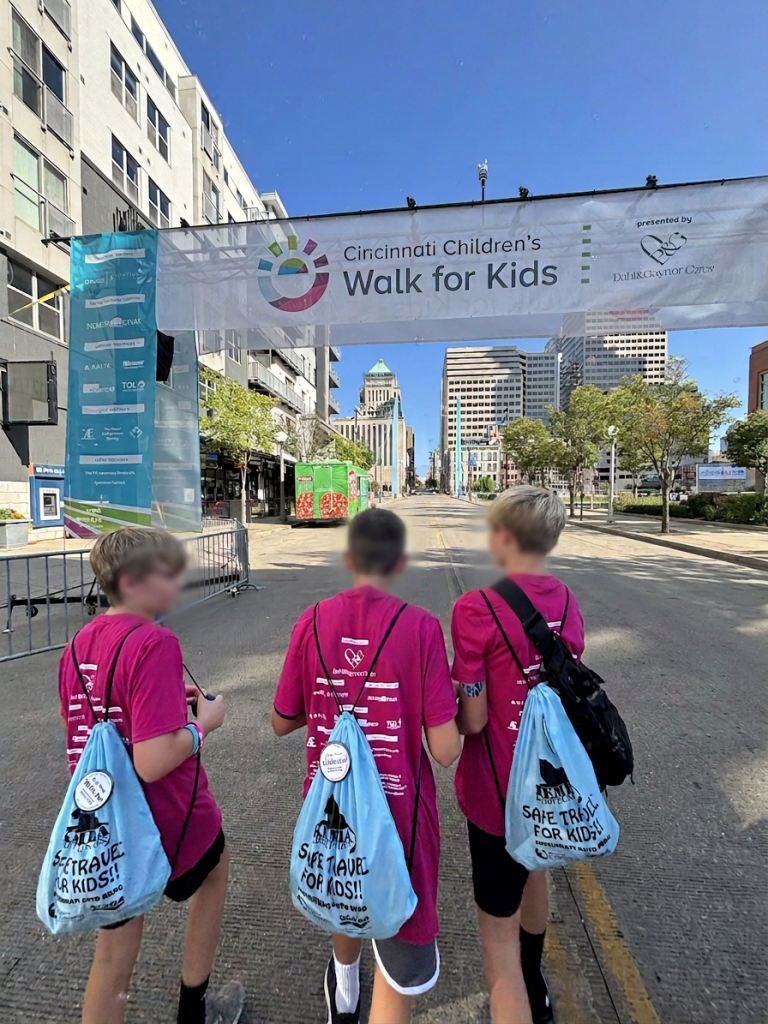
One of the most meaningful parts of our Type 1 Diabetes journey this summer has been participating in a research study and completing the walk fundraiser to support Cincinnati Children’s. From the day of his diagnosis, Cincinnati Children’s has provided exceptional care, guidance, and encouragement for our family. Participating in research is our way of helping advance treatments and create a brighter future for all children living with Type 1 Diabetes. Taking part in the walk fundraiser is another way we can give back to the hospital and the incredible team that has supported us every step of the way.
We walked to support Cincinnati Children’s, the doctors, nurses, researchers, and families who help children like my T1D guy navigate life with T1D. We walk for better treatments, more research, and ultimately, a cure — so one day kids won’t have to grow up counting carbs, checking blood sugar, wearing devices, and relying on insulin just to live. Until there’s a cure, we’ll keep showing up, walking alongside him, and reminding him that he never walks this road alone. 💙.
We’re incredibly grateful for every person who has supported my T1D guy and our family along the way. Whether you chose to walk alongside us, sponsor our team, share our story, or simply cheer us on, every bit of support means more than you know. 💙
The school year is officially behind us, and what a finish it was. This year came with a slightly heavier backpack than most—not just filled with school supplies, but with sensors, pump supplies, snacks, and a lot of resilience. Finishing the year felt like a win in more ways than one. Managing type 1 diabetes alongside schoolwork is never just “normal”—it’s constant decision-making, math in your head, and listening to alarms that don’t care if you’re taking a test or sitting in class. He did it. With the help of amazing teachers, an amazing school nurse, and lots of mom checking in.
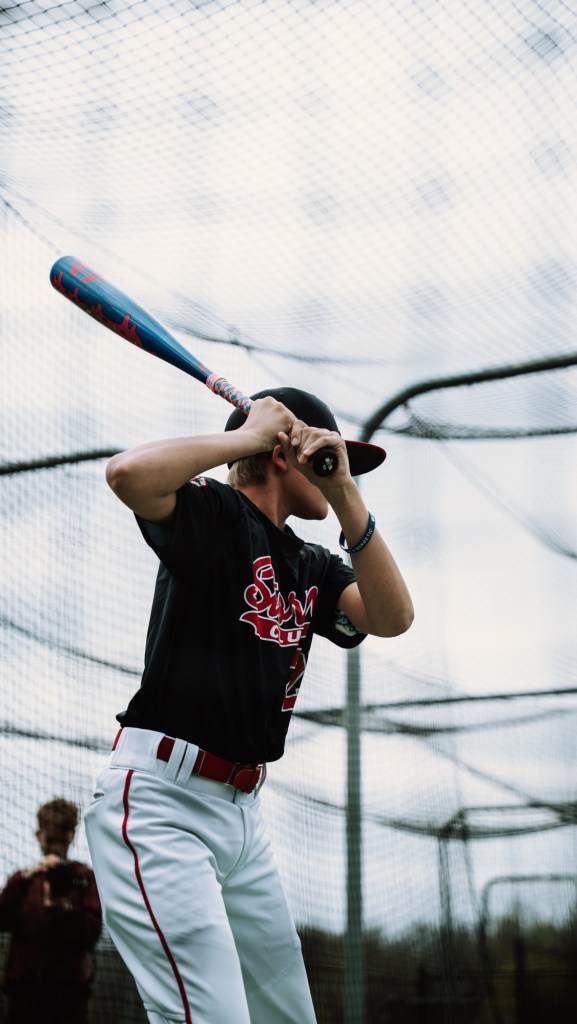
Baseball is now in full swing. Hitting can be an unexpected adventure, especially when a solid swing leads to pain because the pump canula gets pulled out. Now, there’s a routine of packing extra pump supplies—backup for backups—just in case. Long days with multiple games and the heat bring a unique challenge. He can show up with numbers perfectly in range, feeling confident and ready to play, and then out of nowhere, a low hits. It’s one of the hardest parts—how unpredictable it all is. Even when we plan ahead, adjust, and try to stay one step ahead, diabetes doesn’t always play nice. It’s not always smooth, but his determination to keep playing, adapt to this new situation, and keep adjusting is what makes it worth it.
Then there’s swimming—one of the best parts of summer but so far has proven to be a little tricky. When the sensor is underwater, you can’t see the numbers. No quick checks or alerts, and the pump has limited communication. All of this can lead to lows sneaking up unexpectedly.
It’s a constant balance—making sure things are steady before jumping in, taking breaks to check levels, and sometimes just getting out of the water when things feel off. It’s not perfect, but it’s part of learning how to live fully without ignoring the realities of T1D.
Device Frustrations Are Real
Technology is supposed to make this T1D life easier but it hasn’t always felt that way lately. CGM sensor issues, pump failures, leaking canula’s and recalls have added another layer of stress: wondering if your equipment will work like it’s supposed to.
These are the moments where T1D feels less like something you manage and more like something that manages you. One workaround after another we’re still figuring it out.
The Bright Spot: Support That Makes It All Possible
If there’s one thing that stands out the most this season, it’s the people.
His friends have stepped up in the best possible way—not just by being there, but by learning. Learning what the numbers mean. Learning what to watch for. Learning when to step in and help. Those friends have amazing parents who also have jumped in to learn and help with monitoring. That kind of support changes everything. More confidence. More “normal” moments.
And that’s really the goal—to make space for a childhood that feels full and joyful, not defined by diabetes but simply lived alongside it. There are going to be more tech failures, more unexpected lows, and more trial-and-error days. There will also be more games, more swims, more laughter, and more moments that make all of this effort worth it.
It’s been 100 days of Type 1 Diabetes and NOTHING holds him back!
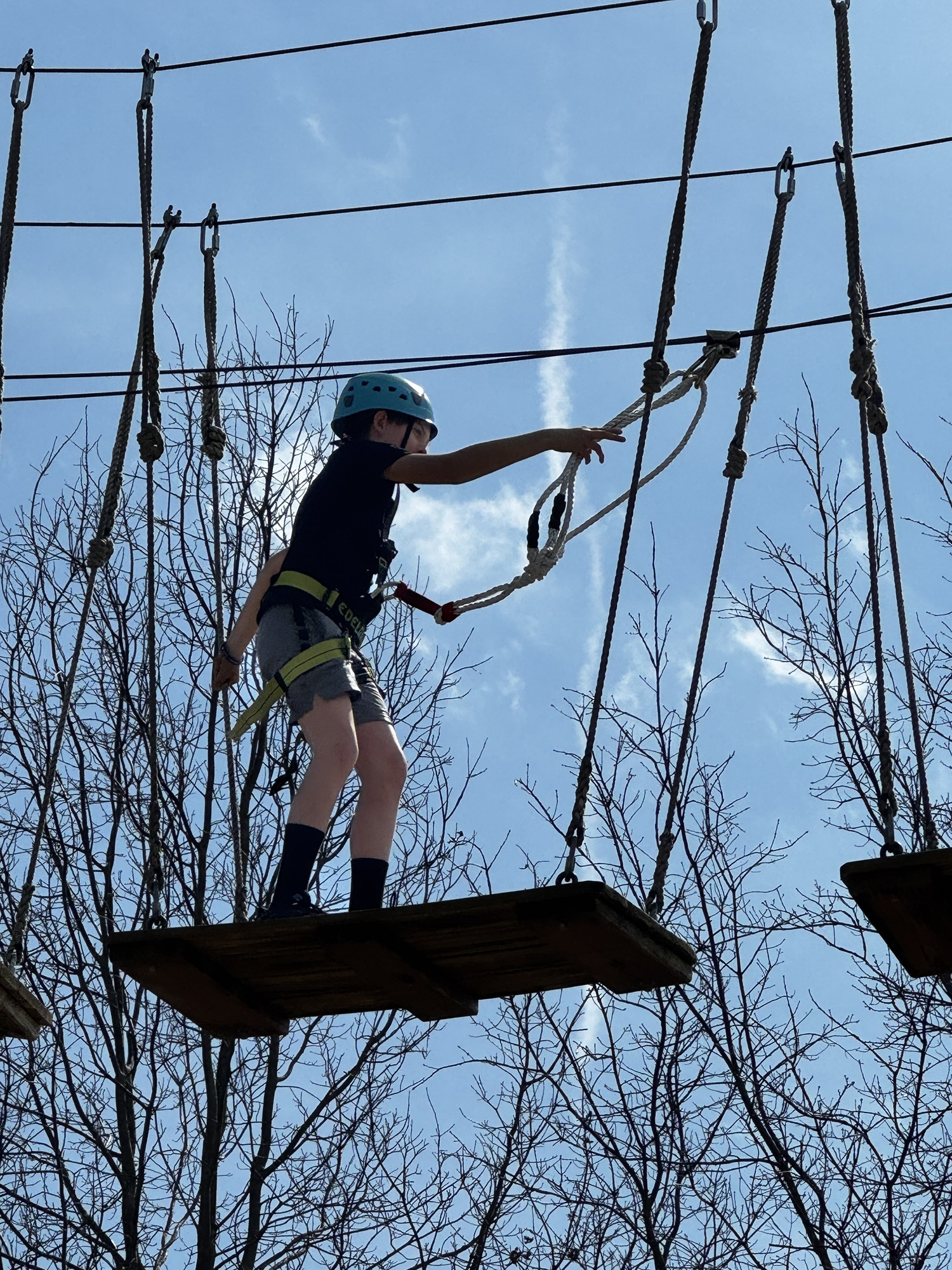
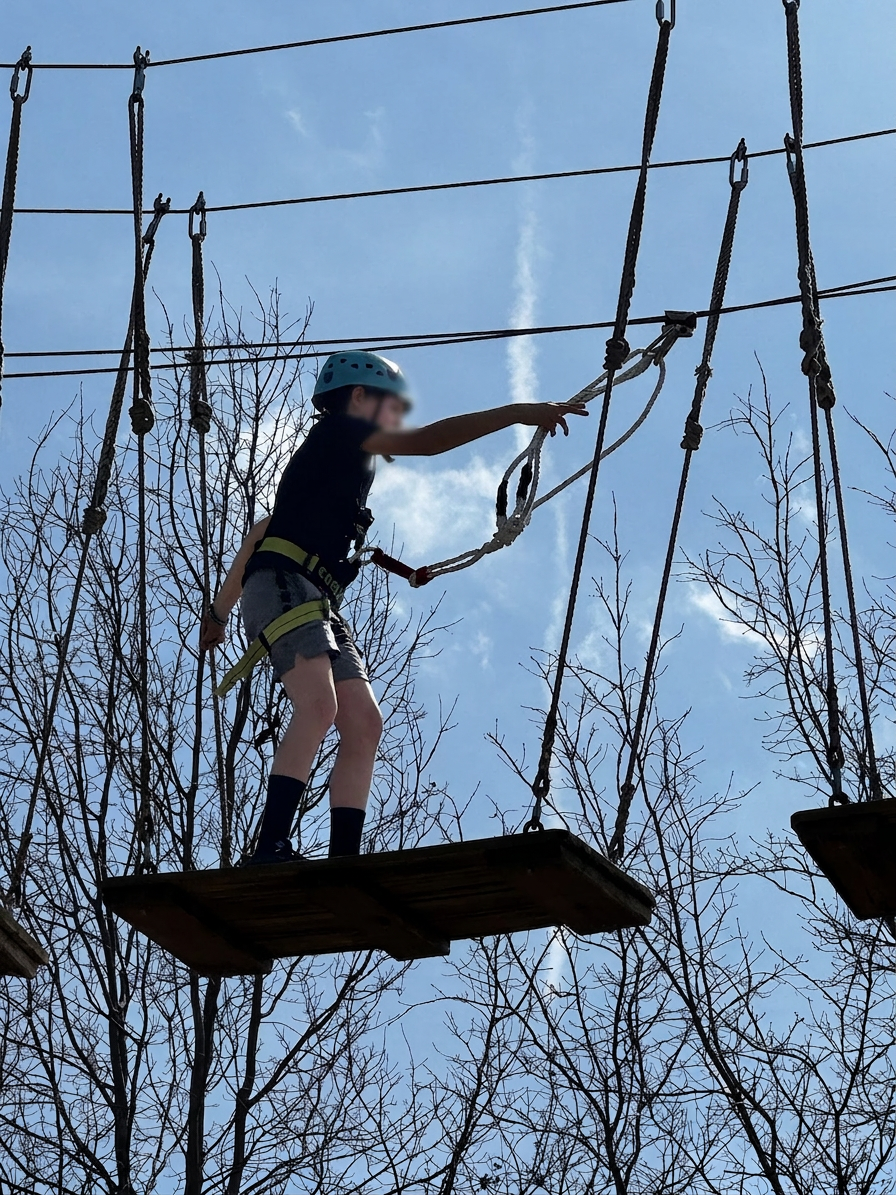
Braving the ropes course Going for a swim in the oceanplaying hard
💙100 days into life with Type 1 Diabetes 🤍 Becoming the mom of a T1D kid changed everything overnight. 100 days in, we’re still learning—but we’re also adapting, growing, and finding our new normal. So proud of this kid.
Not the journey we’d ever choose, but here we are. I feel tired, proud, and hopeful. These last 100 days have taught me how much love can stretch, how worry never really turns off, and how strong a kid (and a mom) can become when there’s no other option. I still wish I could take this all on for him, but I’m learning how to walk beside him instead. This is going to be okay.
The last 30 days with Pablo the Pump (aka. Omnipod 5) have been a game changer. Fewer shots, more flexibility, and days that feel more normal. Pump site changes are usually pretty smooth… sometimes there are tears (because he’s 12 and this stuff is hard) but even then, he bounces back, and we move on.
What amazes me most is how independent he’s becoming—helping manage his pump, paying attention to his numbers, and taking ownership in ways I didn’t expect so soon. I’m still right here, but he’s finding his confidence. Learning more every day, celebrating small wins, adjusting when we have a hard day, and finding our rhythm for what works for him to keep him in a healthy range.
He’s gone on his first sleepover. Tackled his first overnight school trip. We’ve learned how to fly with Type 1 Diabetes and realized it is possible. Outdoor sports are picking back up and proving that it might mean planning—but it doesn’t mean missing out.
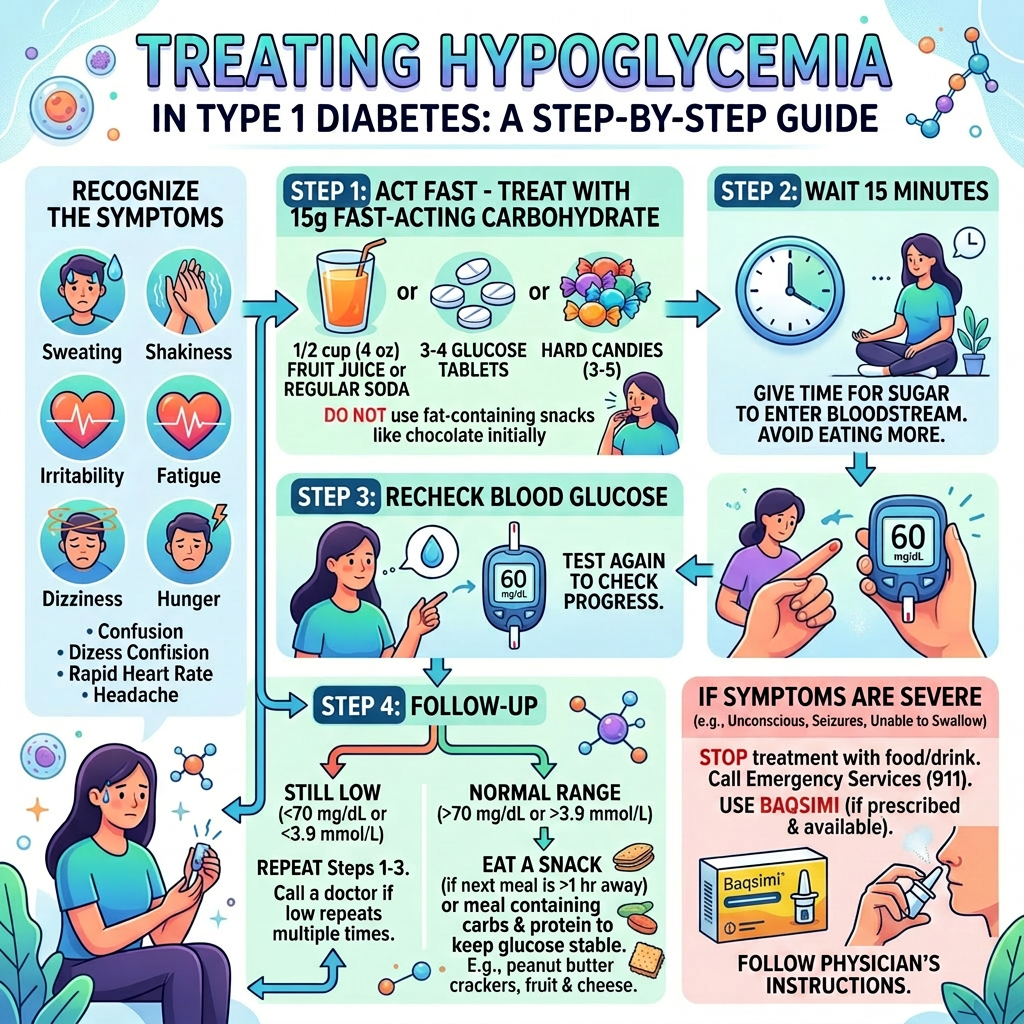
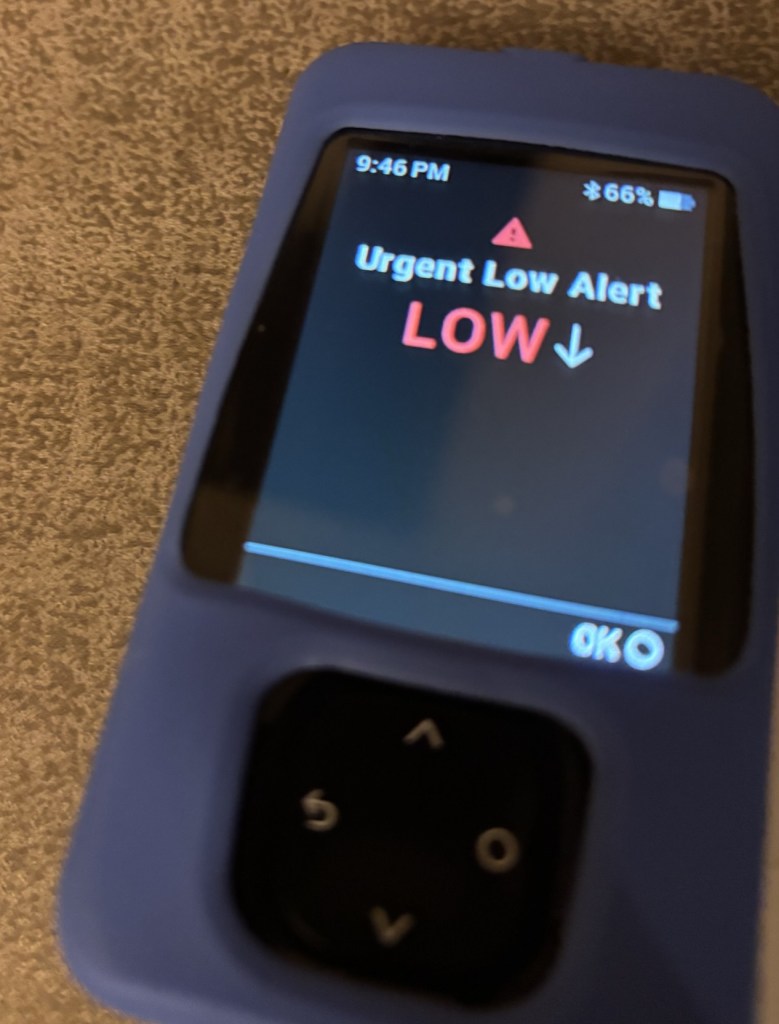
Low blood sugar officially known as hypoglycemia needs to be addressed quickly. When blood sugar is low (for My T1D guy ~80 mg/dL), immediate treatment is required:
Consume 15–20 grams of fast‑acting carbohydrate, such as:
Apple Sauce Pouch
4 oz juice
Hard candy (not chocolate)
Recheck blood sugar after ~15 minutes
Repeat if still low
If symptoms are severe (ie. unconcious) treat with Baqsimi and call 911.
Follow with a longer‑acting carb/snack if needed (Protein source, Peanut Butter Crackers, etc)
My T1D Guy carries this bag with him that has quick and easy snacks for him to use when treating a low blood sugar.
Want to know what’s in the bag? Right now it’s 4oz. Juicy Juice, GoGo Apple Sauce, PB Crackers, Slim Jims, and Welch’s Fruit Snacks!
A low blood sugar for Type 1 Diabetes is treated with fast‑acting carbohydrates—not protein—because carbs raise blood glucose quickly, while protein does not.
Here’s why.
What’s happening during low blood sugar
Low blood sugar (hypoglycemia) means there is too much insulin relative to available glucose in the bloodstream. The urgent goal is to raise blood glucose as fast as possible to protect the brain and prevent symptoms or loss of consciousness.
Why fast‑acting carbohydrates work
1. They turn directly into glucose! Fast‑acting carbs (like glucose tabs, juice, or regular soda) are rapidly digested, enter the bloodstream as glucose within minutes, and Cause a direct, predictable rise in blood sugar.
2. They work even when insulin levels are high. During a low, insulin is often still active (especially in Type 1 diabetes). Carbohydrates can overcome circulating insulin and raise blood sugar fast enough to reverse the low.
Why protein does not treat lows
1. Protein does not convert to glucose quickly. Protein Must be broken down into amino acids. This process is slow, inefficient, and inconsistent. It can take hours, not minutes—far too slow for hypoglycemia.
2. Protein can actually stimulate additional insulin release (in people who still make insulin) Potentially worsen or prolong a low in some situations. This is the opposite of what you want during hypoglycemia.
Why fat doesn’t work either
Fat slows stomach emptying. Delays absorption of any carbs eaten with it
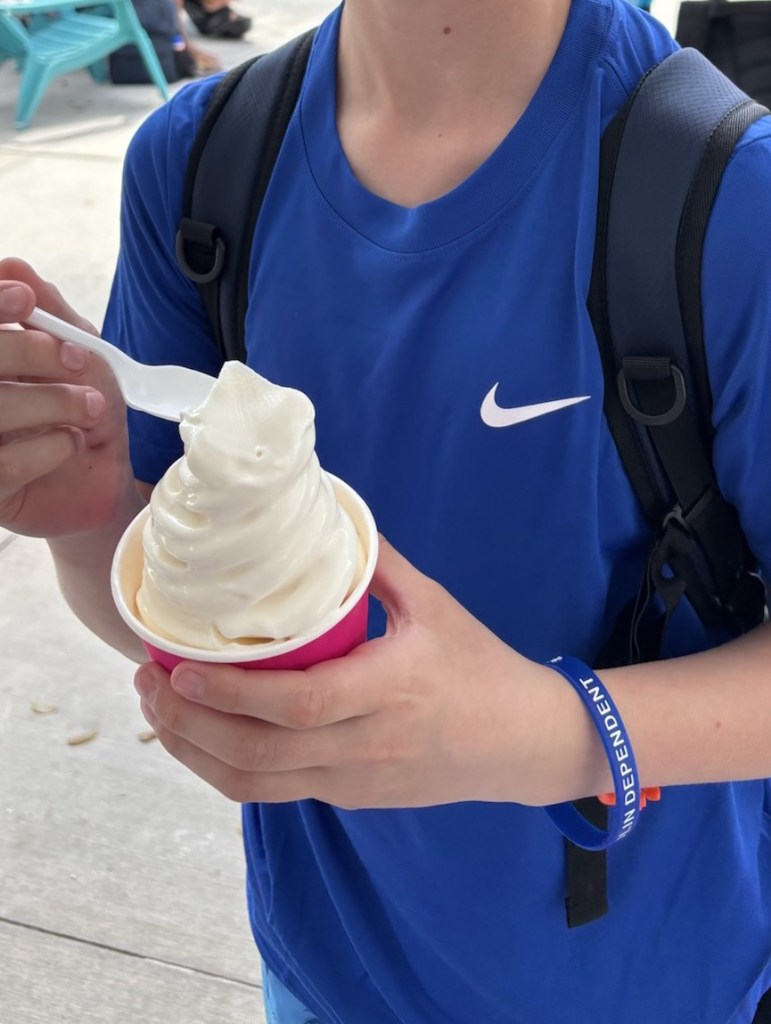
Examples: chocolate, cookies, ice cream These are poor choices for treating lows, even though they contain sugar.
Disclaimer: This T1D Mom isn’t a medical professional. This blog should not serve as medical advice. It is strictly a reflection of our personal experiences and general informationto help educate our friends and those curious about what works for this T1D Guy.
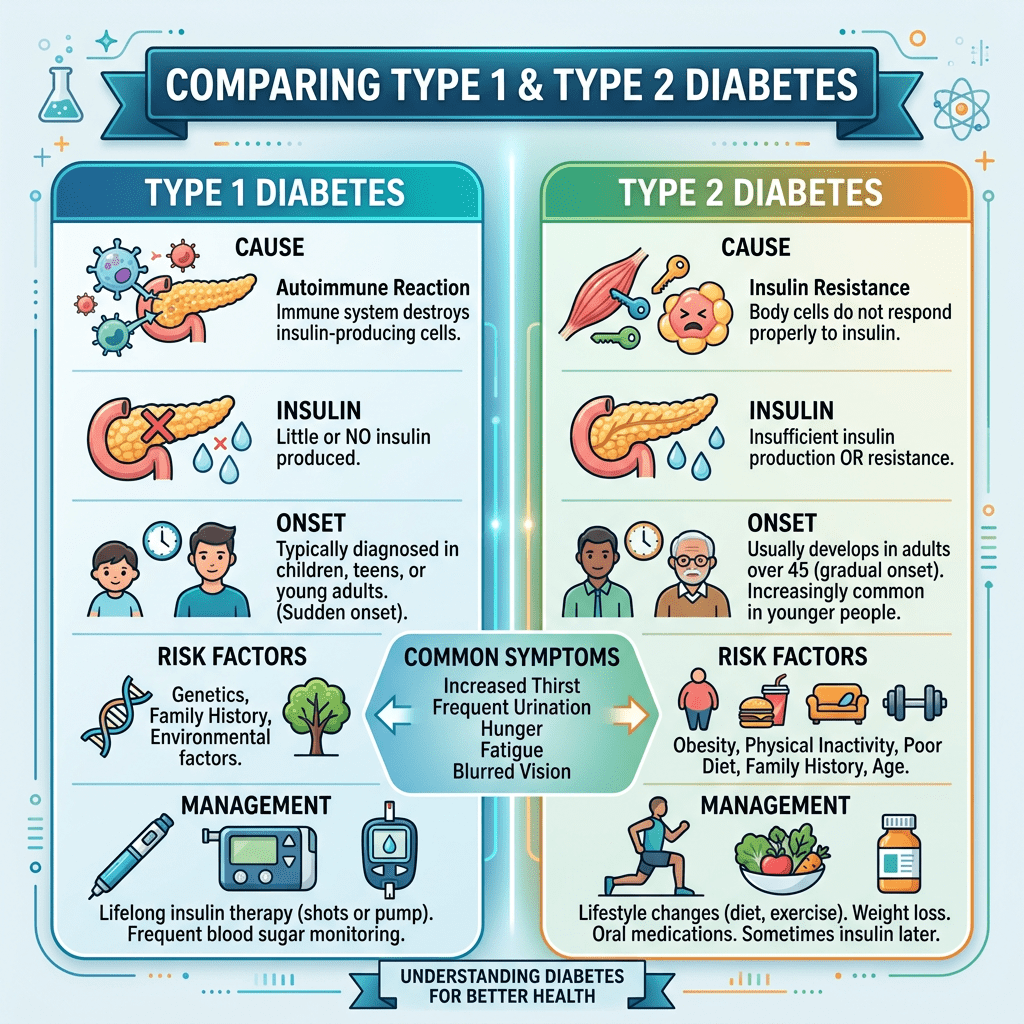
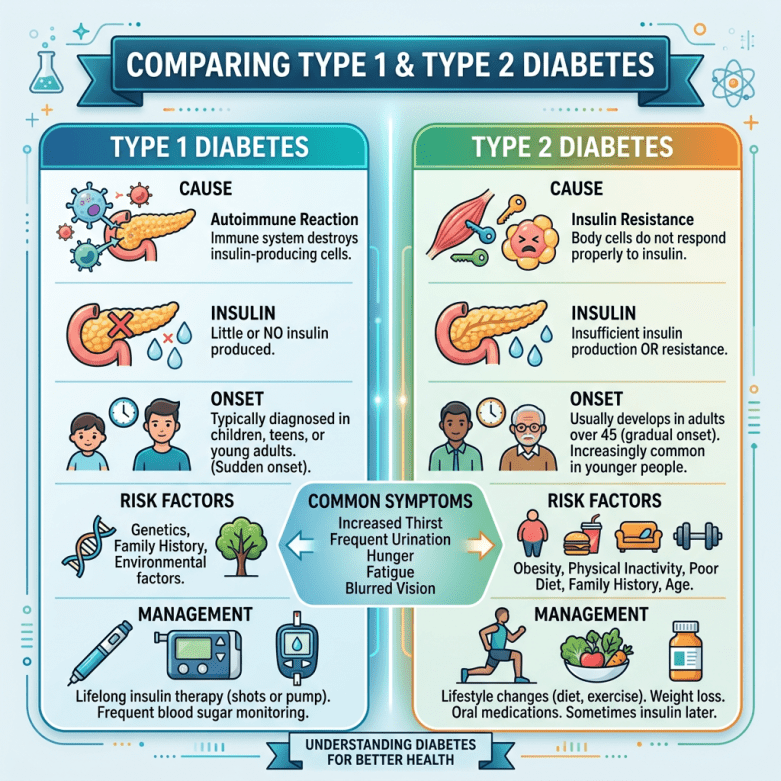
There are distinct and important differences between Type 1 and Type 2 diabetes. My T1D Guy has been receiving a lot of questions from friends who are curious and want to learn more about his condition. Type 2 diabetes is significantly more prevalent, accounting for over 90% to 95% of all diagnosed cases, which can sometimes lead to misunderstanding the distinct differences of Type 1 diabetes. With this in mind, let’s explore the key differences together.
I love a good metaphor…
Think of your body like a car 🚗 that runs on sugar (glucose).
To use that sugar for energy, your body needs a “key” called insulin.
🍎 Type 1 Diabetes
In type 1, the body can’t make insulin at all It’s like having a car with no key 🔑 So kids with type 1 need to get insulin from outside (like shots or a pump) every day It’s not caused by eating too much sugar—it just happens
🍪 Type 2 Diabetes
In type 2, the body still makes insulin, but it doesn’t work very well It’s like having a key that doesn’t fit the lock properly 🔑 Sugar has trouble getting into the body’s cells Sometimes it can be helped with healthy eating, exercise, or medicine
Let’s take a deeper look…
🧬 What causes them?
Type 1: The body’s immune system gets confused and attacks the cells that make insulin
Type 2: The body still makes insulin, but the body’s cells don’t listen to it very well
👶 Who usually gets it?
Type 1: Often diagnosed in kids or teens (but adults can get it too)
Type 2: More common in adults, but kids can get it as well
💉 What is the Treatment?
Type 1: Always needs insulin (shots or a pump)
Type 2: May be managed with food choices, exercise, pills, and sometimes insulin
⚡ How fast does it show up?
Type 1: Symptoms can appear quickly (days or weeks)
Type 2: Usually develops slowly over time
My T1D Guy can still have treats like other kids. He just needs to give himself insulin for the carbohydrates in the treat first! Sometimes this takes a little planning ahead of time.
🚫 Common Misconceptions (Myths vs. Facts)
❌ “Eating too much sugar causes diabetes”
Truth: Type 1 is not caused by food at all Type 2 is not just about sugar—it involves many factors like genetics and how the body uses insulin
❌ “Only overweight people get diabetes”
Truth: Kids with type 1 are often not overweight at all People of all sizes can get type 2
❌ “Type 1 is the ‘bad’ kind and type 2 is the ‘mild’ kind”
Truth: Both are serious and need care They’re just different, not “better” or “worse”
❌ “People with diabetes can’t eat sweets”
Truth: Kids with diabetes can still have treats sometimes They just need to balance it with insulin or healthy habits
❌ “Diabetes goes away”
Truth: Type 1 does not go away Type 2 can sometimes improve a lot, but it still needs attention
❌ “You can catch diabetes from someone”
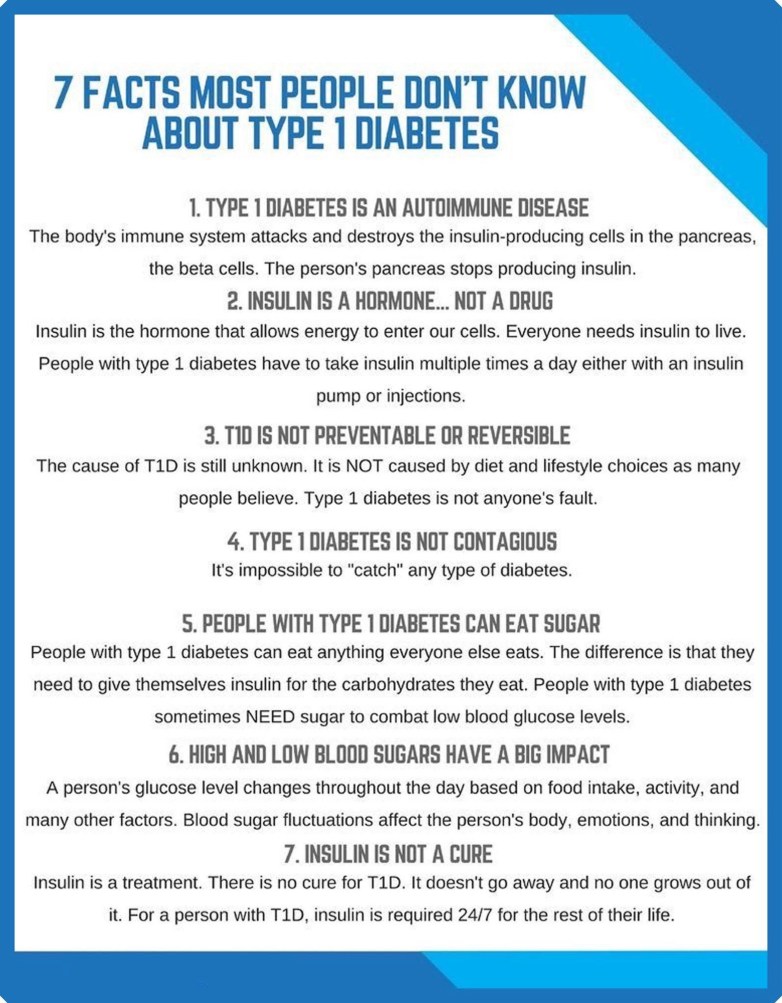
Truth: Diabetes is not contagious—you can’t catch it like a cold
❌“People with Type 1 diabetes need to follow a low‑carbohydrate diet.”
Truth: People with Type 1 diabetes do not have to eat low carb. Type 1 diabetes is caused by lack of insulin, not by eating carbohydrates. Carbohydrates can absolutely be part of a healthy diet for someone with Type 1 diabetes—the key is matching insulin to carbohydrate intake, not eliminating carbs altogether.
Disclaimer: The T1D Mom isn’t a medical professional. This blog should not serve as medical advice. It is strictly a reflection of our personal experiences and general information.
A detailed comparison of causes, symptoms, risk factors, and management of Type 1 and Type 2 diabetes.
Here’s a few things he wants you to know about his T1D!
1. I didn’t do anything to cause type 1 diabetes (T1D) and there is nothing I could have done to avoid being diagnosed. TID is an autoimmune disease and there currently is no cure.
2. My pancreas doesn’t have the ability to produce the insulin my body needs to turn the carbohydrates from the food I eat into energy, so I have to take insulin injections or wear an insulin pump. (Although right now my pancreas is in zombie mode and sometimes still wants to work, this will eventually stop)
3. When my blood sugar is too high or too low, I don’t feel well and I may need extra time to complete a test or assignment after I feel better. Similar with a sports activity.
4. A high blood sugar may cause me to have a difficult time concentrating and I will probably need to use the restroom or drink water more often. I may be irritable or emotional. (High symptoms: nausea, deep sighing breaths, confusion, flushed and warm skin, drowsiness)
5. Low blood sugar can be dangerous; I will need to eat fast-acting sugar or snacks immediately to prevent or treat low blood sugar levels. I can be shaky and confuse words. (Low symptoms: shaky, pale and sweaty skin, headache, hunger, weakness, trembling, fainting)
6. I don’t want to be recognized as being “different” because of my Diabetes.
If I’m not myself, I might just need a snack. They’re in my bag! Tell me to get a snack bro.
Here’s what Mom wants you to know if he goes too low..
IF UNCONSCIOUS… we treat him with glucagon nasal spray and call emergency services. (What is Glucagon? Glucagon is a hormone medicine used to raise blood sugar in emergencies when a person with diabetes is experiencing severe hypoglycemia and cannot orally (by mouth) take sugar.)
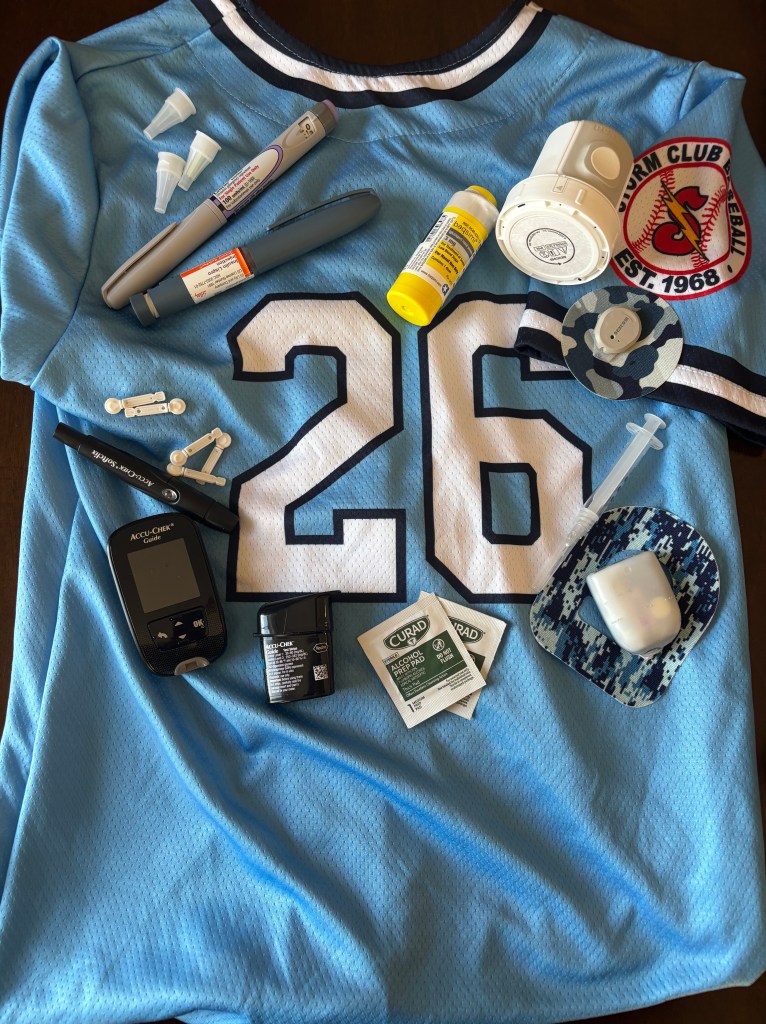
I’ve always been the mom to carry first aid kits and supplies galore. This season there will be a few new supplies in the bag for us.
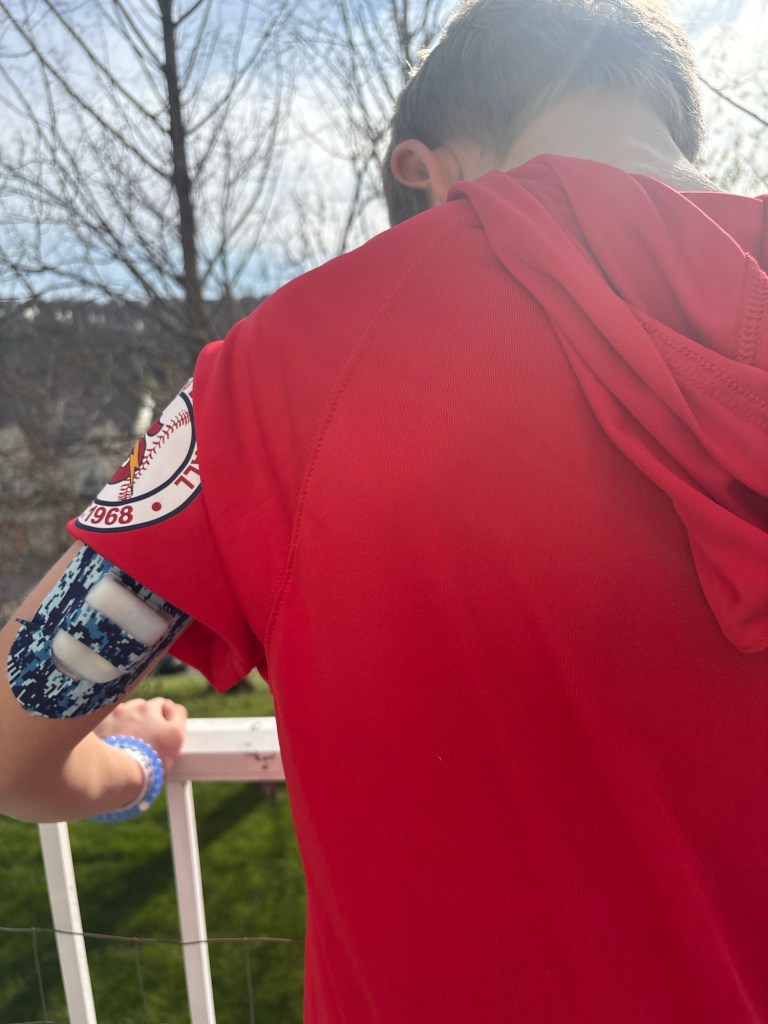
Kids with Type 1 diabetes can play sports just like other kids, but they have to pay extra attention to their bodies while they play. My T1D Guy has some extra equipment on him to help with monitoring his levels while he plays.
Physical activity affects blood sugar levels. During sports, blood sugar can drop too low or rise too high. My T1D Guy may need to take breaks to check blood sugar, eat a snack, or give himself an insulin dose. These breaks are about staying healthy and safe—not about effort or ability. Planning is very important. Before practice or games, students may need to adjust food or insulin so their body has enough energy to play safely.
Changes don’t stop when the game ends. Blood sugar can change hours after exercise, even later that day or overnight, which means continued monitoring is needed. The extra equipment he has on his body helps with this.
The first few weeks were tough, but we survived. We have both asked how many more shots or finger pokes today? This honeymoon phase? It’s not as pleasant as it sounds. There have been many sleepless nights. Will we ever sleep again? As the mom, I felt like I had a newborn again. This extra full-time job working as a pancreas (a.k.a. momcreas) making so many tiny decisions through the day isn’t easy. The pancreas “honeymoon” has put us through many LOWS.
At just over 60 days, and he’s still ever resilient, showing remarkable strength and determination each day. He’s genuinely thrilled to be on a pump, which has transformed his daily routine in such a positive way. With fewer needles to contend with, and less sleepless nights lately, the change has brought not just relief but also a newfound sense of freedom, enabling him to focus on the activities he loves without constant concern or interruption of going low.
Our journey with Type 1 Diabetes began quietly, slipping into our lives between the hustle and bustle of the holidays. While the world was holly and jolly with Christmas celebrations, and new year excitement, something else had begun to display what the new year would bring. At first, the signs seemed like nothing out of the ordinary — especially for an active, growing 11 year old boy.
A little moodier than usual, I chalked it up to the early hints of pre-teenage angst. He had some muscle aches and pains, but he’s an active sports kid; bumps and soreness are part of our daily life with three sports. The tiredness and the hunger? Growing boys eat and nap like it’s their job. He grew in height and shoe size but oddly seemed to be getting thinner.
Every explanation made sense… until they didn’t.
As winter break ended and he returned to school, the symptoms didn’t fade the way I expected. Instead, they became more consistent and nagging this might be more. His thirst was constant. It wasn’t just his excitement for his new Owala water bottles he received for Christmas. His energy dipped in ways that didn’t match his usual spark and silliness. He wanted couch time and his normally bright personality had seemed to dim. The boy with warm hands and heart who wears shorts year-round was constantly freezing. It was sometimes exhausting to walk a flight of steps. I didn’t want to be the worrisome mom who brings his kid in for just some regular virus in the height of flu season. There was something inside me told me there was something more going on here. It was more than moodiness, more than germs, more than a growth spurt. Even if it was just a virus, it was worth being evaluated.
When calling the nurse line I went through a quick list of symptoms, all with other justifiable explanations, and was told there wasn’t much that correlated to urgency, but I could bring him in to be seen. I scheduled an appointment for after school the next day because there was no fever or other “contagious” reason to miss school.
He came home from school that day rapidly declining with what was presenting as severe exhaustion, loss of appetite, sore throat and labored breathing. I knew we were headed to the right place for answers, but what could it be? Does he have low iron or is this Mono? Did he drink too much water and wash out his sodium levels? Could this be Covid or flu? What about a bladder infection? Of course, I took to google earlier in the day with all the symptoms I was collecting in a note for the Pediatrician and saw a few more serious diagnosis’ but dismissed them as no chance, not my kid.
We walked through the symptom journey with our attentive Pediatrician who was evaluating him while asking us both questions. She had come to a conclusion with a urine dip test and the conversation. The air in the room changed. The words “type one diabetes” arrived like a heavy stone dropped into still water, sending ripples through everything we thought we knew. This was life-altering. Unexpected. Impossible to fully grasp in that instant.
We swiftly went on to Children’s after collecting a few items at home. We were immediately admitted to hospital, thankfully our Pediatrician had called ahead for him. That hospital became our new world for those first few days — a place of beeping monitors, hourly checks, new vocabulary, needles, insulin, and gentle but information-packed conversations. I watched my brave guy face finger pokes, multiple IV lines, and unfamiliar routines with a courage no 11 year old should ever have to muster, yet somehow, he did.
In the middle of the shock of a life altering autoimmune diagnosis, something else emerged: resilience. His and ours together. I kept the environment calm, our own little bubble while we adjusted to what would be our new life. Constantly reminding myself, we can do this. I can do this.
We’ll figure it out.
Surrounded by compassionate educators, nurses, and physicians, we learned — together — how to count carbs, check blood sugars, give insulin, and navigate a world we never thought we’d need to understand. It was overwhelming at times, like drinking from a firehose, but it was also hopeful. We realized that although this diagnosis changes life, it doesn’t take away the joy, the childhood, or the future.
The first night home was emotional and exhausting. I checked on him more times than I can count, balancing fear with a steady reminder to myself, we got this. Each good number felt like a tiny victory. Each off number was a reminder that this is a marathon, not a sprint — a new rhythm we’re learning day by day. Highs and lows will balance. We have a plan. We will adapt as needed. We’re determined not to give up.
Through everything, he has remained completely himself: funny, kind, athletic, silly, curious, and endlessly brave and determined.
Type 1 diabetes is now part of our story, but it does not define him — or us. It is a challenge, yes, but also a testament to strength, love, science, and the community we are surrounded with. This diagnosis simply reminded us how deeply we are loved. How strong our circle truly was. How much support we were provided from the very moment we learned our fate.
Our family surrounded us with love and support during our hospital stay, helping us plan for the future and providing a sense of steadiness. Our friends and sports team families showered us with kindness, eager to learn about type 1 diabetes and check in on us, ensuring we always felt connected and supported. At school, the nurse became an invaluable partner—calm, knowledgeable, and attentive—offering support and peace of mind each day. It was uplifting how our school community united with empathy and prayers, sending well wishes and cards, making it easier to swallow this diagnosis. We are truly grateful for our medical team at Children’s, who have equipped us with wonderful resources. I’ve built connections with other T1D families at school and in the community, allowing us to ask questions and feel understood through our experiences. Each day we are learning and growing together.
The first few weeks were tough, but we survived. Though, we have both asked how many more shots or finger pokes today? This honeymoon phase? It’s not as pleasant as it sounds. There have been many sleepless nights. As the mom, I felt like I had a newborn again.
We decided from the first weekend home we wouldn’t let anything hold him back. Baseball, soccer, snowboarding, school and life. I’m keeping a closer eye and there are a few more breaks and extra steps to life but nothing has been impossible. Even with zombie pancreas and no sleep. We adapt and overcome.
We’re just over 60 days now, and he’s still ever resilient, and now thrilled to be on a pump. There are less needles and less sleepless nights lately.
This is our journey. Check the Highs and Lows for more posts and updates to the story.